Should You Consider Getting a Home Warranty?
Picture this scenario: It's the middle of winter, and your furnace suddenly stops working. The repair quote? $4,800. Or maybe it's summer, and your AC unit fails during a heatwave. Another $6,500.
These aren't rare occurrences. 68% of homes experience at least one major system failure annually, and the average homeowner spends $2,321 on emergency repairs each year.
Whether you're a current homeowner, selling your home, or buying a new one, the question is the same: Does a home warranty make financial sense?
Let's break down exactly when it does—and when it doesn't.
What Exactly Is a Home Warranty?
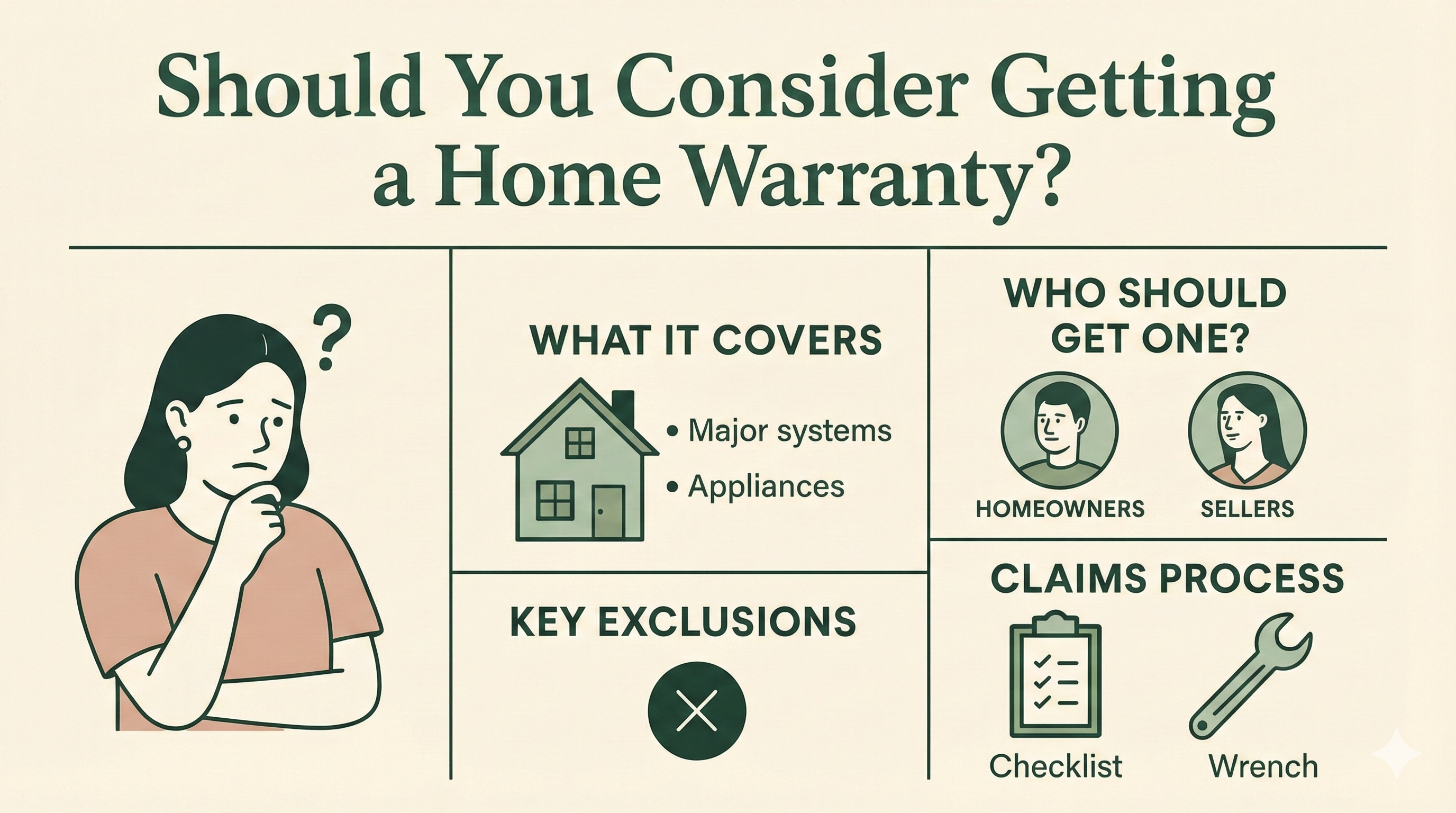
A home warranty is a service contract that covers repair or replacement of your home's major systems and appliances when they break down due to normal wear and tear.
It’s important to keep in mind that a home warranty is different than home insurance. It’s similar in how car insurance and a car warranty cover different items. Home insurance, like car insurance, covers unforeseen damage and catastrophes, whereas a warranty fixes things that brake earlier than they should have.
Here's what it IS:
✅ Coverage for unexpected breakdowns from everyday use
✅ Protection for HVAC, plumbing, electrical systems, and appliances
✅ Predictable costs instead of surprise $5,000 repair bills
✅ Access to a network of pre-screened service contractors
Here's what it's NOT:
❌ Homeowners insurance (that covers disasters like fires, floods, theft)
❌ A manufacturer's warranty (that covers defects in new products)
❌ A maintenance plan (you still must maintain your systems)
❌ Coverage for pre-existing problems
Who Should Consider a Home Warranty?
FOR CURRENT HOMEOWNERS:
✅ You're a Good Candidate If:
- Your home is 15+ years old with original systems
- Major systems (HVAC, water heater) are 10+ years old
- You don't have $3,000-5,000 in emergency savings
- You're not handy and can't DIY repairs
- You want predictable monthly/annual costs
- You're anxious about unexpected expenses
FOR SELLERS:
✅ You Should Offer One If:
- Your home is 20+ years old with aging systems
- You're listing during peak heating or cooling season
- You're competing with newer listings
- Pre-inspection revealed "working but old" items
- You can't afford surprise repairs during listing
- A previous deal fell through due to system concerns
What's Covered (and What's Not)
Standard Coverage Usually Includes:
- HVAC systems (heating, cooling, ductwork)
- Electrical systems
- Plumbing systems and stoppages
- Water heater (gas/electric)
- Built-in appliances (dishwasher, range, microwave)
- Garbage disposal
- Ceiling and exhaust fans
- Garage door opener
Premium Plans May Add:
- Washer and dryer
- Refrigerator
- Pool/spa equipment
- Well pump
- Septic system
- Limited roof leak coverage
- Smart home devices
Critical Exclusions
❌ Pre-existing conditions - Already broken = not covered
❌ Lack of maintenance - Neglect voids coverage
❌ Cosmetic issues - Appearance problems don't qualify
❌ Beyond serviceable life - Systems that are too old
❌ Code violations - Illegal installations
❌ Improper repairs - Previous DIY disasters
How the Claims Process Works
Understanding this prevents frustration:
1. System or appliance fails
2. You call the warranty company (not your own contractor)
3. They assign a service provider from their network
4. You pay the service fee ($75-125) to the technician
5. Technician diagnoses and requests approval
6. Company approves or denies based on terms
7. Repair or replacement proceeds (if approved)
Reality Check:
- You typically can't choose your contractor
- Response time: 24 hours to 3 days (varies)
- Some companies require multiple approvals
- Not all repairs are approved
Bottom line
A home warranty is NOT:
- A substitute for proper maintenance
- A solution for severely neglected homes
- Coverage for every possible problem
- A guarantee of instant service
A home warranty CAN BE:
- Valuable protection for aging systems
- Budget-friendly peace of mind
- Strategic advantage for sellers
- Smart protection for new buyers
- Financial safety net for limited savings
Make Your Decision
The Real Question
It's not "Should you get a warranty?"
It's "Does a warranty make financial sense for MY situation?"
Whether you're a homeowner protecting your investment, a seller differentiating your listing, or a buyer evaluating an offer—a home warranty is a strategic decision based on:
✓ Age and condition of your systems
✓ Your financial reserves
✓ Your risk tolerance
✓ Your specific goals