How Much is My House Worth?
All homeowners want to know what their home is worth—especially in a hot market. What goes into pricing a home? How do real estate agents and appraisers decide how much your house is worth?
If you're a Seller: it's important to know how your agent is appraising your home and how Buyers will decide what your house is worth.
If you're a Buyer: it's important to know how the Seller has arrived at their asking price. If you're in a bidding war, it's even more important to understand how market value is determined so that you can put your best foot forward, without paying too much.
While every REALTOR approaches a home's valuation slightly differently, here's the lowdown on how a Comparative Market Analysis (CMA) is performed and the factors that are taken into consideration.
1. We Look at Recent Sales
When pricing a home, real estate agents and appraisers will look at recent sales on your street and in your neighborhood.
The first step in deciding how much a home is worth is choosing nearby sold properties to compare the house to. While Sellers may be tempted to cherry-pick the comparable sales that support the highest price (and Buyers are tempted to cherry-pick the comparables that support the lowest price), the best comparables for a home are:
- Nearest in location (same street or nearby similar streets)
- Most recently sold (in the last weeks or months)
- Closest in size, style, and condition
The key when looking at comparable sales or comps is to use the homes that have actually sold in the current market. Unsold or active listings are part of the CMA because they represent the competition, and we need to know what we are up against, but they shouldn't be the basis of setting your price range.
We determine the price range from the sold properties using the 3 criteria location, size, and style in descending order of importance:
Location
The most important driver of real estate value is the location of the property. So when you're picking comps, you start by looking at the homes in the immediate area preferably within a half-mile radius same street or nearby similar streets.
Size
Now within the location, we narrow down on the ones closest in size in terms of the overall square footage, number of bedrooms and bathrooms, lot size, and things like that. A home with more square footage, or more bedrooms, is generally going to sell for more than a smaller home.
Style
And then once you've found your nearby, similarly-sized homes, you prioritize the homes with a similar style. Style refers to the type of home: single family, split, ranch, townhome, condominium, etc. If the home is a colonial, other colonials are better comps than, say, a ranch or a contemporary.
2. We Make Adjustments
Once we establish the price range, we start making adjustments – adding and subtracting $$ to account for how the homes differ to figure out the price within that range. Every home is different, and every difference has a small but meaningful impact on the valuation.
For example, finished basements and second bathrooms add value, corner lots and next-to-no storage detract; the house backing onto the railway tracks is worth less than the one backing onto woods. Experienced REALTORS and appraisers know what value people have historically put on certain features and can adjust your price accordingly.
When comparing houses and making adjustments for a CMA, many factors are considered:
- Bedrooms & bathrooms – Most single-family houses in New Jersey have four bedrooms. There's a bonus for 5+ bedrooms, especially on the first floor. A two-bathroom home is more valuable than a one-bathroom home.
- Location influences – A home backing onto a cemetery won't sell for as much as one backing onto woods.
- Lot characteristics – Size, level vs. slope, trees and woods
- Square footage & layout – Bigger is more valuable. Open layouts are preferred over closed-off rooms. Flow matters.
- Parking & outdoor space – Garage vs. no parking, driveway vs. laneway. Outdoor spaces are evaluated on size, style, design, maintenance, views.
- School district – Homes in superior school districts sell for more.
- Condition – Maintenance, floors, carpets, mechanicals (electrical, plumbing, furnace, A/C, roof)
- Amenities & finishes – Hardwood floors, updated kitchens and bathrooms, pools, fireplaces, landscaping. Quality and recency of renovations matter, but personal taste shouldn't overshadow what an average buyer would value.
- Basement – Finished vs. unfinished
- Taxes & local environment – Property tax comparisons, neighborhood appearance, power lines, traffic flow
Other factors that influence sale price:
- Time of year sold (hot market vs. Christmas season)
- Whether the home was staged
- Quality of photos and marketing
- Showing accessibility
- Seller motivation
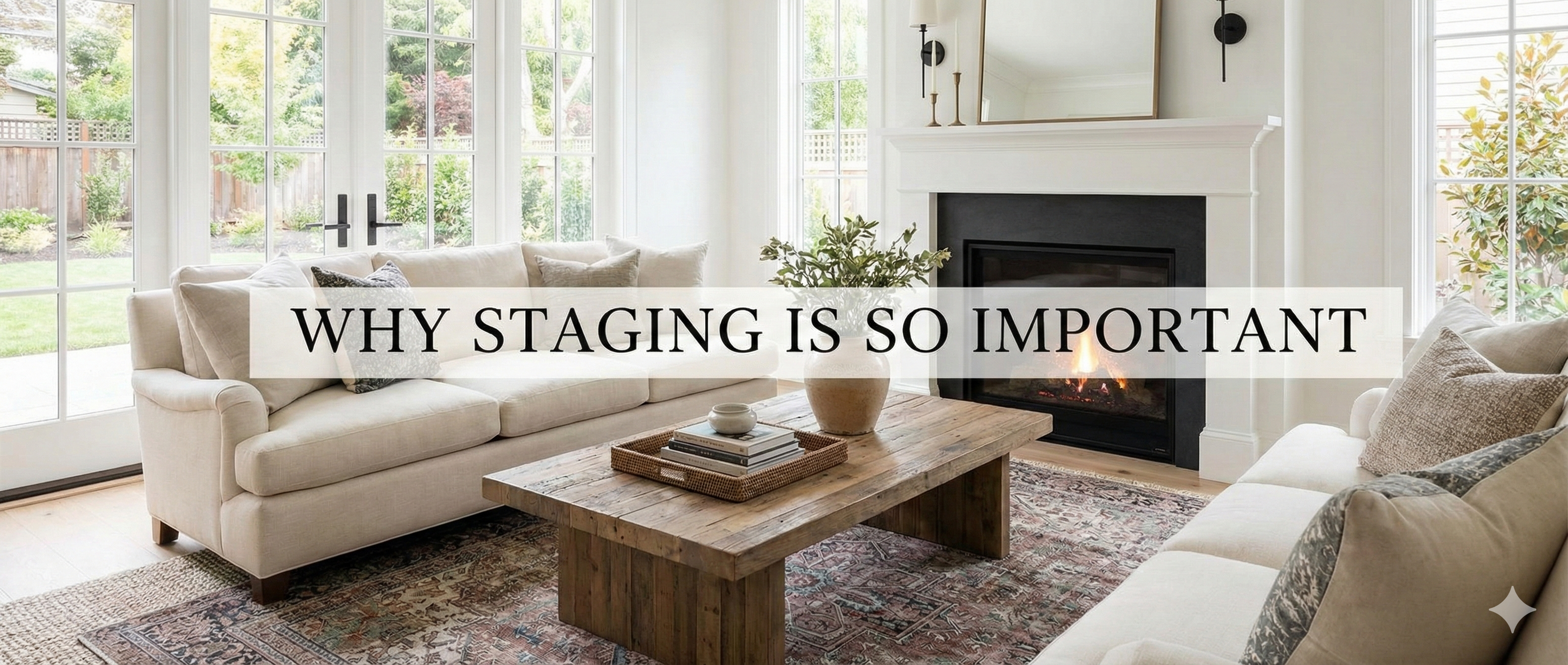
All these factors don't change your price range, just where you fall within it. You want your listing immaculately staged and in fantastic showing condition to get the best price possible in your range.
3. Validating the Home's Value
While many agents skip this step, we perform a 3-way analysis to look for consistencies, trends and anomalies:
- Statistical analysis – How much has the house appreciated since it was purchased compared to the overall market?
- Neighborhood analysis – What's the average price of similar homes in the neighborhood over the past year?
- Competitive analysis – What's happening right now? Are houses selling in multiple offers in 6 days or sitting for 30 days?
4. Understanding Current Competition
MLS data is helpful, but we need to see what potential buyers will see when they tour homes at the same time as yours. Will they think your home is overpriced compared to others? Will you outshine the competition?
5. The Economic Reality
Supply and demand drive prices – when there are too many buyers chasing too few houses, prices go up. Interest rates and the overall economy also affect prices. Even great granite countertops and hardwood floors don't matter if economic conditions suppress the market.
6. The Buyer Demographic
Who's most likely to buy your home? A starter home may attract first-time buyers. A four-bedroom colonial may appeal to growing families. A townhouse in a walkable downtown may be perfect for young professionals.
The broader the appeal, the stronger the demand—and the higher the potential price. Beyond identifying the demographic, strategic pricing requires understanding where these buyers are actively searching. In any neighborhood, certain price ranges attract significantly more activity. If homes between $450,000-$475,000 are getting 15 showings while homes at $490,000 get only 5, that's critical data. Sometimes pricing at $450,000 to capture the largest pool of buyers generates more competition than pricing at $465,000 and waiting.
7. The Neighborhood
Is your house in a hot neighborhood? Is it growing or mature? What new shops, services, and transportation options are coming? Has something negative happened (violence, poor school ratings) that will affect value?
8. What Doesn't Affect The Value of Your House
There are also factors that are NOT relevant in determining market value:
- The price the Seller needs to get to break even
- How much you spent on renovations
- The asking price on the MLS listing
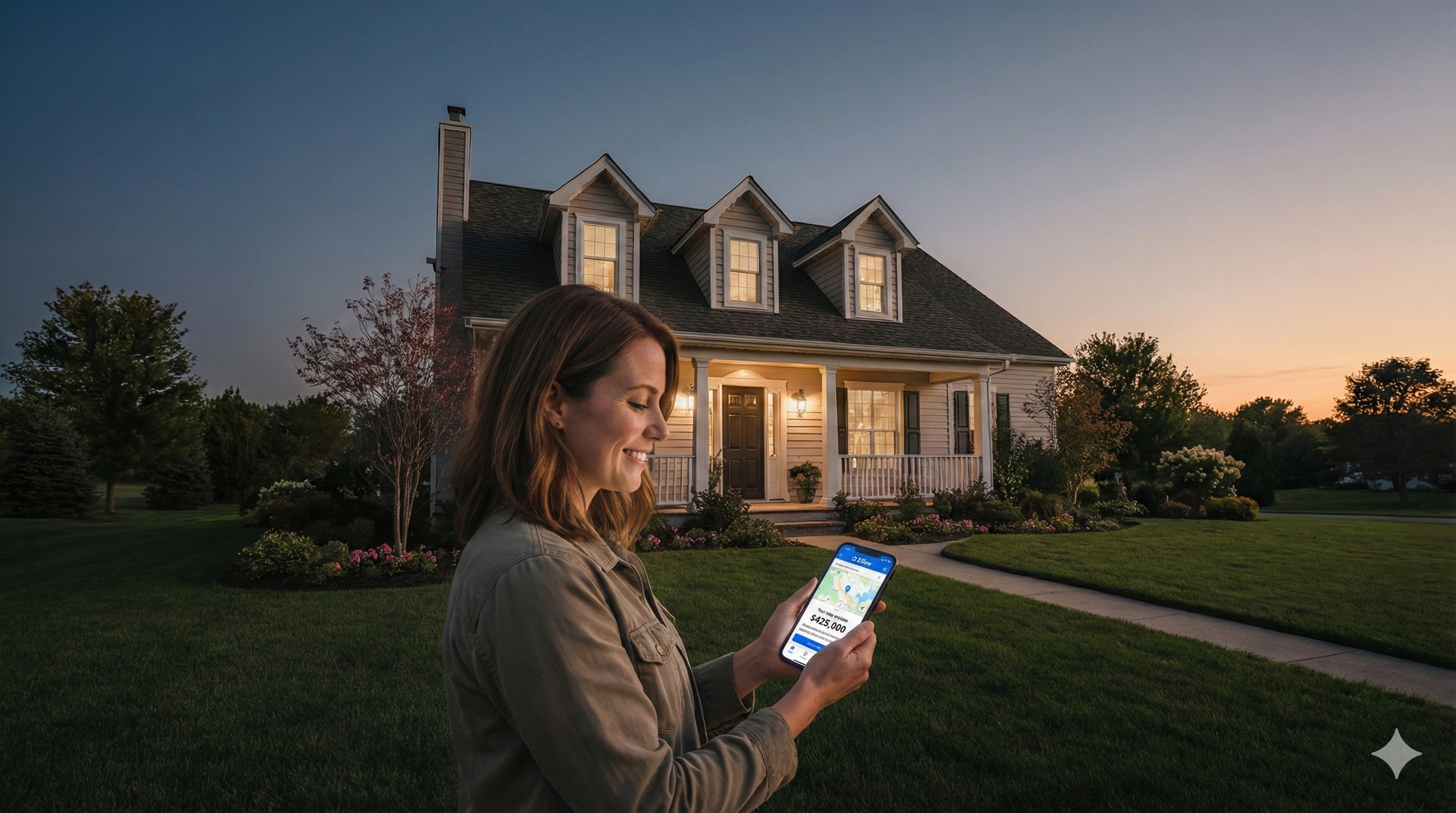
- Automated online estimates
9. Ultimately the Market Sets the Price
"You don't set the price, and the realtor doesn't set the price—the market sets the price."
Too often, sellers price based on other considerations unrelated to market reality:
- What they need to get to their next home (buyers don't care)
- Improvements made thinking a $400,000 house plus a $50,000 kitchen equals $450,000. Homes appreciate but improvements depreciate. Most projects return 50-75 cents on the dollar.
- Zestimate if it's above market value
10. Your Home's Value Is a Moving Target
What your house or condo is worth today is not necessarily what it is worth tomorrow, or next week or next year. As the factors that affect price change, so does how much your house is worth.
At the end of the day, your home is worth what someone is willing to pay for it. But a lot more goes into pricing a home and an experienced New Jersey REALTOR can make sure that you sell for top dollar.
If you're wondering what your house is worth, get in touch. We'll happily give you a no-obligation evaluation. We'll walk through your home, analyze the market, and give you a clear idea of what your home is worth in today's real estate market.