What to Know When Buying New Construction in New Jersey
Walking into a decked-out model home on a builder's development is very different than going to an open house for a previously-owned home, even if it's been staged.
The appeal is obvious: customize features, select your lot location, and move into a pristine never-before-lived-in home. Being part of the process from start to finish means more control over the outcome.
But it can also be stressful, time-consuming, and not always smooth sailing if you don't know what you're doing.
Whether you're working with a local builder or a major national construction company—buying new construction requires different strategies than buying a resale home.
Here's what you need to know for a successful journey to your new build.
Why Buyers Love New Construction
Everything is brand new, energy-efficient, and customizable. Modern floor plans, low maintenance, and builder warranties make it appealing. But there are important considerations that can catch buyers off guard.
What Makes New Construction Different
The Builder Controls Everything
Unlike resale homes where terms are negotiable, the builder provides the contract and it heavily favors them. Closing dates are estimates, not guarantees, and standard buyer contingencies may not exist.
Watch for escalation clauses: If materials or construction costs rise during your build (which can take 6-12+ months), some builders include clauses allowing price increases. Understand this fully before signing.
Critical: Have a real estate attorney review the builder's contract before signing. New Jersey is an attorney-review state—use it.
Bring Your Own Agent
The friendly salesperson at the model home represents the builder, not you. Their job is to get the highest price and best terms for the builder.
You won't save money by going alone. The builder pays your agent's commission regardless. That money goes to the builder's sales team whether you use an agent or not.
Your agent negotiates—from closing cost credits to free upgrades. They help you stick to your budget and avoid upgrades that don't add resale value.
Buying pre-construction is complex. Your agent reviews contract timelines, cancellation rights, deposit schedules, and escalation clauses. Always have an attorney review before waiving protections.
Important: Bring your agent to your first visit. If you visit alone first, the builder may refuse to work with an agent later.
Expect Delays and the Unexpected at times
Know your timeline but expect delays. From start to finish, new build homes require lots of details on so many fronts, which means delays can happen. Materials may take longer to get delivered, certain customizations could take longer or are no longer in-stock, or unexpected weather conditions can put a hold on things.
Have a plan in place if there are delays and if you want to time selling your current home with the completion of your new home.
Also be prepared for unexpected things even after you move into your home because a new build has not yet been tested by someone living there like a resale home.
There can be issues that don’t come up until your fourth or fifth shower, for example. You want to be sure you know how to handle things like that, even if you did have an inspection.
I typically negotiate that the builder agrees to fix certain things after move-in for a period of time.
Negotiating Incentives
While contracts aren't negotiable, incentives often are—especially at quarter-end or in slower markets.
Common builder incentives:
- Closing cost credits ($5,000-$15,000)
- Interest rate buy-downs
- Free upgrades (countertops, flooring, appliances)
- Lot premiums waived (corner lots, cul-de-sacs)
- HOA fee coverage for first 6-12 months
What you can negotiate:
- Keeping incentives even if you don't use their preferred lender
- Free or discounted upgrades
- Premium lot selection at no extra cost
- Credits for minor punch-list items at closing
Smart Upgrade Decisions
Builders mark up upgrades significantly. A $10,000 builder upgrade may cost $5,000-$6,000 with your own contractor after closing.
Worth doing with builder: Structural changes, electrical/plumbing upgrades, HVAC zones, smart home pre-wiring.
Skip and do yourself: Flooring, countertops, fixtures, landscaping, paint (unless included as incentives).
Warranties and Walkthroughs
New home warranties typically include:
- 1-year: workmanship and materials
- 2-year: major systems (HVAC, plumbing, electrical)
- 10-year: structural (foundation, framing)
Not covered: Wear and tear, negligence, cosmetic issues, landscaping, appliances.
Review warranty procedures carefully for submitting claims. Negotiate for post-move-in repairs—I typically get builders to agree to fix issues discovered within 30-60 days after closing.
Critical walkthroughs:
Pre-drywall – Inspect framing, electrical, plumbing, HVAC, insulation before walls close up.
Final walkthrough – 24-48 hours before closing, create a punch list of unfinished items.
Get a Home Inspection (Yes, Really)
Absolutely get an inspection on new construction. Builders make mistakes, subcontractors cut corners, and municipal inspectors don't catch everything.
Schedule a pre-drywall inspection and a pre-closing inspection. Inspectors commonly find electrical errors, HVAC issues, plumbing leaks, insulation problems, and grading issues that could cause water intrusion.
Cost: $400-$600. Worth every penny.
What Happens After the Builder Moves On
Here's what buyers don't realize: Once the builder sells out the development, their sales agent is not available anymore. And when problems arise months later, you're on your own—unless you have your own agent.
Real example from a recent client:
My clients bought a new construction investment property in a development 90 minutes from their home. The builder's sales agent was friendly and helpful during the purchase. But once all homes sold, she was unreachable and stopped responding entirely.
Then the problems started:
Pipe burst from neighbor's unit flooded my client's property and damaged floors. Thankfully, the builder's warranty covered repairs—but here's the issue: the sales agent had persuaded them to skip the home inspection ("it's brand new, you don't need one"). Without an inspection, they had no baseline documentation of the home's condition.
Deed had the owner's name misspelled. This seems minor, but if not corrected immediately while the builder is still accessible, you'll pay an attorney hundreds later to fix it. The sales agent wasn't available to help and when my client called me, I made them aware of the urgency to resolve this issue now versus later to avoid any title issues down the road when they go to sell it.
Tax abatement wasn't clearly explained. The sales agent made the 5-year tax abatement sound amazing. What she didn't communicate clearly and stress was that: it started the year *after* purchase. My clients closed in February and got hit with a full tax bill. I helped them call the township tax collector to confirm when the abatement would actually kick in.
Township rental requirements included having a local agent within the county. As with any rental property, the owner needed to complete the landlord registration and rental inspection before a certificate of occupancy could be issued for the tenant to move in. This township has particularly strict rules, including a requirement that either the owner or an in-county agent handle the registration and inspection process. The sales agent initially agreed to assist, but since she was no longer reachable, we had to secure a local county agent to manage the process so the owner did not have to take time off work.
The lesson? Your own agent doesn't disappear after closing and will help you with any issues such as deed corrections, warranty claims, township requirements, and any other problems that arise when the builder's sales team is not around anymore.
Financing and Appraisals
If the home is already built: Standard mortgage process.
If to-be-built: You pay a deposit, make no payments during construction, then close with a traditional mortgage when complete.
You Don't Have to Use the Builder's Lender
Builders offer incentives for using their preferred lender—but shop around. Their onsite lender may feel convenient, but they might not have the best deal. Contract terms often change based on which lender you use. Understand what you can and can't do before deciding.
Appraisal challenges: New construction appraisals can be tricky because comparable sales may not exist yet. If it appraises low, you'll need to negotiate with the builder, bring extra cash, or walk away. Make sure your agent provides comparable sales data to the appraiser.
The Deposit Structure
Builder deposits are much higher than resale homes. Resale homes require 5% or less. Builders often require 10-20% to fund construction.
Typical schedule:
- $3,000-$5,000 at contract signing
- Balance to 5% within 10-15 days
- Additional 5% at 30 days, 90 days, or groundbreaking
- Final 5% at occupancy
Be financially prepared for these larger deposits upfront.
Critical New Jersey Considerations
Property Taxes Will Increase
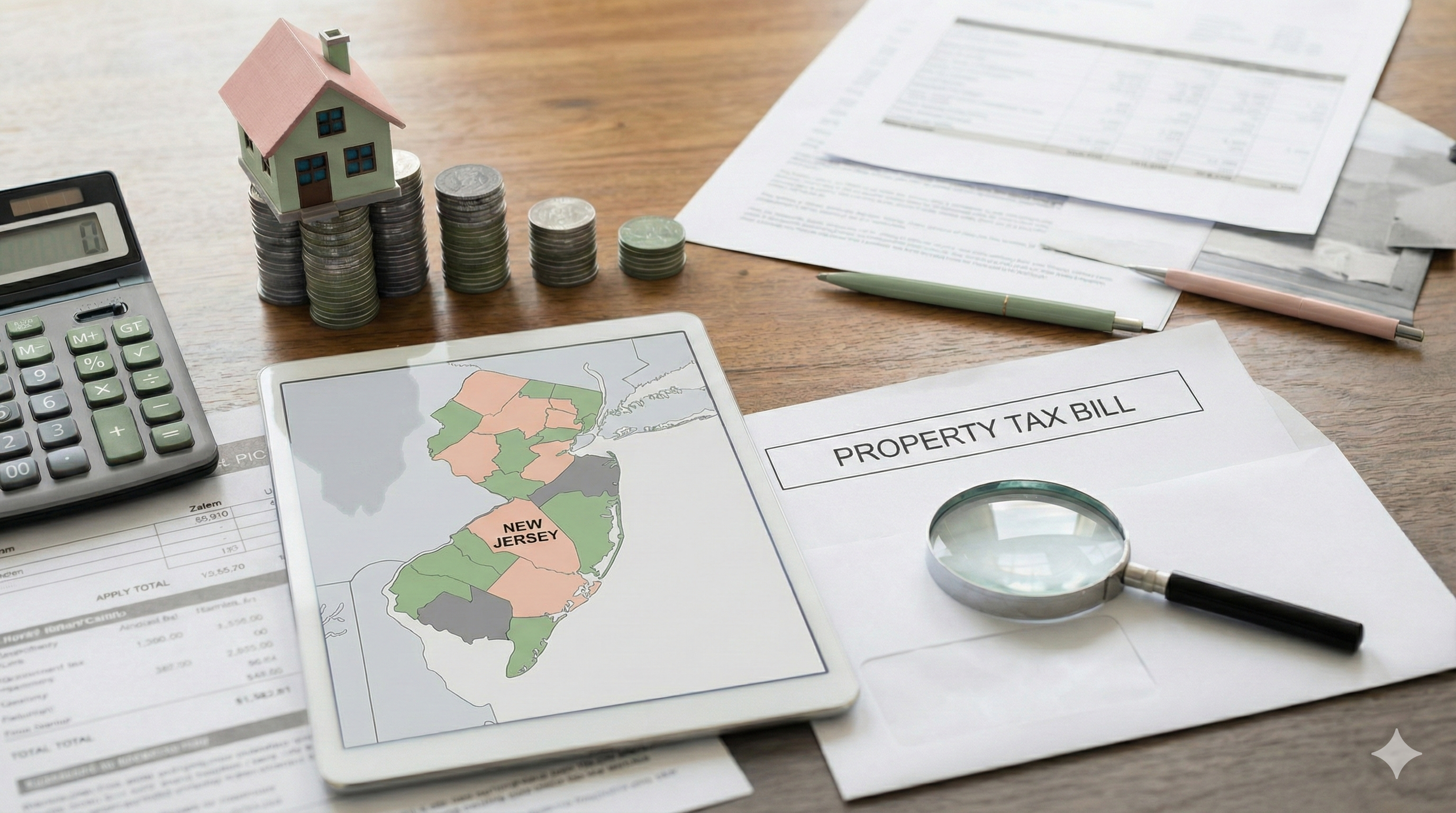
Your initial property tax bill will be much lower than your final bill. While under construction, the property is assessed on land value only. Once complete, your taxes could double or triple.
Example: Year 1 taxes (land only): $4,000 → Year 2 taxes (after completion): $12,000
Budget for the higher amount, not the initial bill.
HOA Fees and Township Requirements
Many developments have HOA fees covering snow removal, lawn maintenance, and amenities. Get clarity on what's included and whether fees will increase.
Required Certificates
You'll need a Certificate of Occupancy (CO) and Certificate of Compliance before closing. The builder handles these, but confirm they're in place.
Pros and Cons Summary
Pros of Buying New Construction
✅ Everything is brand new and under warranty
✅ Energy-efficient and low maintenance
✅ Ability to customize finishes and features
✅ Modern floor plans and smart home features
✅ No bidding wars or competition
✅ Community amenities in many developments
Cons of Buying New Construction
❌ Less negotiating power on contract terms
❌ Timeline delays are common
❌ Property taxes may increase significantly after completion
❌ Limited resale comps for appraisal
❌ Builders mark up upgrades significantly
❌ You're buying into an unfinished neighborhood
❌ Potential construction noise and disruption for months/years
The Bottom Line
Buying new construction in New Jersey offers many advantages—modern, energy-efficient homes customized to your preferences. But it requires a different approach than buying resale.
Keys to success:
- Bring your own agent from day one
- Have an attorney review the builder's contract
- Shop around for lenders—don't automatically use the builder's
- Negotiate incentives aggressively
- Choose upgrades strategically (structural yes, cosmetic no)
- Get inspections at pre-drywall and pre-closing
- Budget for property tax increases after reassessment
- Plan for higher deposits (10-20% vs. 5% for resale)
- Don't sell your current home until construction is nearly complete
The biggest mistake? Assuming "new" means "perfect" and skipping protections like inspections and legal review. Even new homes have defects, and builders can delay timelines.
If you're considering new construction in Middlesex County, partner with someone who knows pre-construction and the specific project you're interested in. I know the good builders, the developments to watch, and can walk you through what can be an intimidating process—from start to post-move-in.